Can RFID transform efficiency during the Holiday Shopping season?
For a customer, few things are more frustrating than an "out-of-stock" notification on a desired item. During major sales events like Black Friday and Cyber Monday, that notification translates directly into a lost sale. As retailers navigate another record-breaking holiday season, the pressure to perfect inventory management is immense. The key to solving this perennial problem may lie in RFID technology.
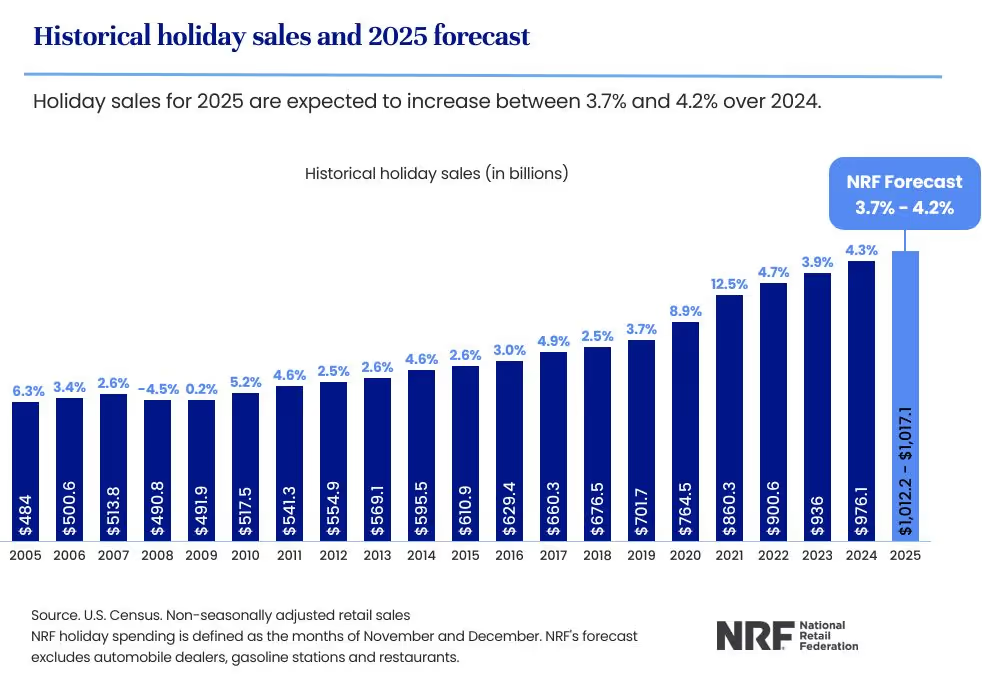
The 2025 holiday shopping season is already demonstrating immense consumer activity. According to Adobe Analytics, online spending from November 1st to December 1st has already reached $137.4 billion, a 7.1% year-over-year increase. The National Retail Federation (NRF) forecasts that retail sales for November and December will surpass $1 trillion for the first time, growing between 3.7% and 4.2% over 2024. This surge in spending highlights a critical operational challenge: how can retailers manage unprecedented demand without succumbing to inventory chaos?
The high stakes of holiday inventory mismanagement
The holiday rush puts immense strain on supply chains and inventory systems. While massive sales figures are positive, they also expose operational weaknesses. The most common consumer complaint during this period is product availability. Shoppers are often met with out-of-stock items online or empty shelves in-store, leading to disappointment and brand abandonment. 42% of respondents from a recent survey conducted by Kinetic319 mentioned “out of stock” messaging as their biggest frustration.
In 2025, consumers face ongoing frustrations with inventory inaccuracies and slow system updates, especially during peak sales events. It's common for shoppers to see items listed as available, only to encounter out-of-stock notifications during checkout or after placing an order—undermining trust and leading to abandoned carts. These disconnects between real-time inventory and front-end listings remain a top reason for lost sales and negative brand experiences.
On the operational side, retailers continue to battle inventory imbalances: insufficient stock results in missed revenue and unsatisfied customers, while excess stock creates high carrying costs and requires heavy discounting after the season, with consequences at the environmental level caused by additional shipping or textile waste increase, things that could be avoided by ensuring accurate inventory management. Meeting modern consumer expectations demands inventory systems that are both agile and highly accurate, ensuring brands can instantly respond to surges in demand and deliver a seamless experience when stakes—and expectations—are highest.
The 2025 shopping landscape by the numbers
This year’s data paints a clear picture of a resilient and digitally savvy consumer base. Understanding these trends is crucial for identifying where operational improvements can have the most impact.
Unprecedented spending and digital integration
Figures show that the scale of holiday shopping requires a level of precision that traditional inventory methods often fail to provide. Adobe Analytics projects that the full 2025 holiday season (November and December) will generate a record $253.4 billion in online spending. This growth is driven by several key factors:
/ Cyber Week dominance: The period from Thanksgiving through Cyber Monday continues to be the most critical shopping window. A record 186.9 million people planned to shop during this five-day stretch, according to the NRF.
/ Mobile commerce is king: Mobile devices are set to account for a record 56.1% of online revenue this holiday season. This trend underscores the need for a seamless omnichannel experience where online and in-store inventories are perfectly aligned.
/ Top Categories: Apparel is the second-highest spend category after electronics, according to the latest Adobe data. Apparel and accessories remain central to holiday shopping lists, with high SKU complexity and demand for both online and physical retail. For brands, maintaining stock accuracy in these fast-moving categories is critical to meeting customer expectations and avoiding missed sales.
Improving Inventory Management with RFID
Traditional inventory-tracking methods, such as perpetual inventory, are prone to error. Manual counts are time-consuming, inaccurate, and create discrepancies between warehouse, store, and e-commerce stock levels. This inaccuracy is the root cause of many holiday shopping frustrations.
Digital transformation is a necessity. RFID (Radio-Frequency Identification) technology offers a direct solution to these inventory challenges by providing near-perfect stock visibility.
By embedding RFID tags into products or their labels, preferably at source, retailers can automate inventory tracking with exceptional speed and accuracy. The RFID technology addresses the core problems that plague retailers during peak seasons.
Key advantages of RFID during peak sales
Implementing RFID provides tangible benefits that directly counter the challenges of Black Friday and Cyber Monday.
• Real-time stock visibility: RFID systems provide an accurate, real-time picture of inventory across the entire supply chain. This eliminates the guesswork that leads to both stock-outs and overstocking, ensuring products are available when and where customers want them.
• Enhanced on-shelf availability: With accurate data, store associates can replenish shelves proactively, maximizing sales opportunities. For online shoppers, this means the "in-stock" status is reliable, building trust and reducing abandoned carts.
• Streamlined omnichannel fulfillment: The rise of Buy Online, Pick Up In-Store (BOPIS) and other omnichannel services depends entirely on accurate inventory data. RFID ensures that when a customer makes a "click-and-collect" purchase, the item is actually available, preventing a negative customer experience.
• Increased operational productivity: Automated scanning significantly reduces the labor required for inventory counts. This frees up employees to focus on customer service—a critical differentiator during the busy holiday season.
• Reduced shrinkage and counterfeiting: RFID tags improve security by tracking items from the point of manufacture to the point of sale. This helps identify and reduce theft and prevent counterfeit goods from entering the supply chain
Partner with Trimco Group for RFID tagging at source
For brands in the apparel and accessories industries, the complexity of managing countless styles, sizes, and colors makes RFID an invaluable tool. Trimco Group is a trusted partner for brands and retailers that have chosen to implement RFID, often combining it with trim and labeling solutions for maximum efficiency.
Navigating the demands of a trillion-dollar holiday season requires robust, intelligent systems. Imagine if your brand had RFID implemented this shopping season—how many stock-outs, inefficiencies, and lost opportunities could have been avoided? Now is the time to consider RFID so you’re not just reacting to peak sales periods, but prepared to deliver a better experience for your customers and your business when the next big sales event arrives.
Ask us anything about RFID solutions.
Sources:
2025 Holiday Shopping Statistics, Trends & Insights | Adobe
NRF | Thanksgiving Weekend Expected to Draw Largest Number of Shoppers on Record
7 Holiday Shopping Frustrations & How Retailers C– Kinetic319