Prepare Your Brand for EU PPWR Compliance
Navigate the new Packaging regulations and transition to sustainable packaging solutions.
The EU Packaging and Packaging Waste Regulation (PPWR) is changing the way textile and footwear brands design, use, and track packaging. Deadlines are approaching, and waiting for full regulatory clarity is not a viable strategy. Brands that delay might face supply chain bottlenecks and more issues later on.
What's New: EU Commission Publishes PPWR FAQ & Legal Guidance
On 30 March, 2026 the European Commission published its long-awaited PPWR FAQ and Legal Guidance document. Trimco Group in collaboration with Ohana Public Affairs has run initial analysis to clarify what this means specifically for the Fashion and Footwear industry — and for global label and packaging suppliers like Trimco Group.
Key clarifications from the FAQ:
/ Packaging lawfully placed on the market before 12 August 2026 (or before the specific application date of a given provision) may remain on the market without being adapted, withdrawn, or recalled — except reusable packaging, which must eventually comply. This is intentional, to avoid unnecessary waste.
/ The first EPR reporting deadline remains 1 June 2029. Until then, companies must continue using existing national reporting formats.
The implementing act to harmonise EPR registration and reporting — originally expected in early 2026 — has been delayed, but this does not prevent companies from preparing now.
Important gaps still remain: There is currently no clarification on Article 15 identification labelling requirements for packaging — a point causing significant concern across the industry. Equally, no guidance exists on how brands are expected to meet the 100% reuse targets for intra-company and intra-Member State transport packaging by 2030.
These gaps underscore how heavily PPWR still depends on secondary legislation yet to be published: implementing acts, delegated acts, and harmonised standards that will define practical obligations in the years ahead.
Key Deadlines at a Glance
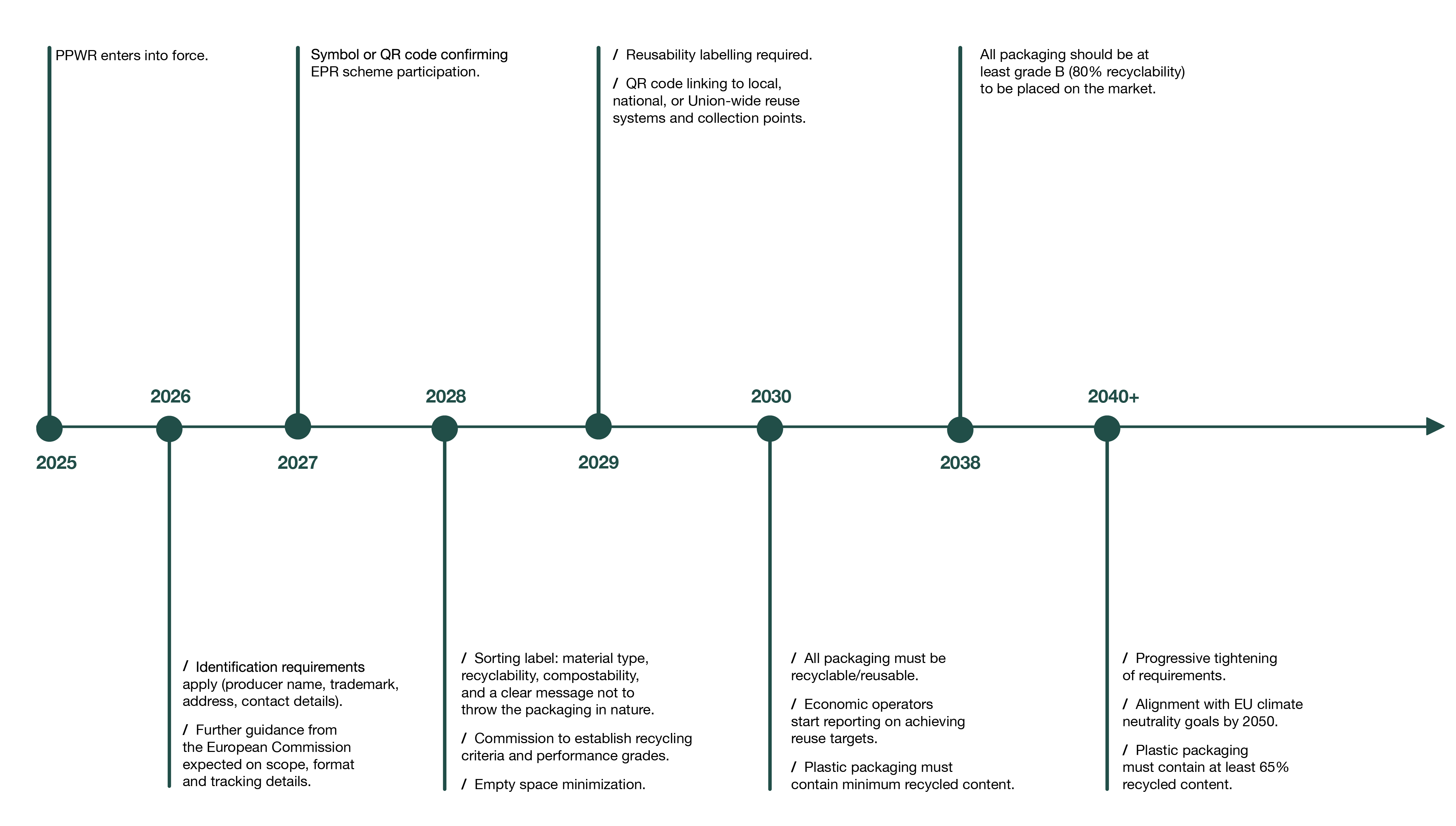
PPWR is along-term regulatory roadmap — not a single deadline. New requirements phase in year by year through 2040.
While these deadlines might change, here's what matters most for textile and footwear brands:
12 Aug 2026. Conformity assessments mandatory for all packaging. Labelling must include type, batch, or serial number. Brand trademark and postal address required on-pack or via QR code.
Feb 2027. EPR participation must be confirmed via a standardised digital symbol (e.g. QR code) on all packaging under EPR schemes.
Aug 2028. Harmonised sorting labels required on all packaging — showing material composition and recyclability status using EU-standard pictograms.
Jun 2029. First reporting under harmonised EU EPR rules due.
2030.. All packaging must be recyclable. Non-contact-sensitive plastic packaging must contain ≥35% recycled content. Maximum 50% empty space ratio for e-commerce and transport packaging.
2038. All packaging must achieve at least Grade B (≥80% recyclability) to be placed on the market.
2040. Plastic packaging must contain ≥65% recycled content, aligned with EU climate neutrality goals.

What Packaging Is in Scope?
The PPWR applies a broad definition of packaging. For textile and footwear brands, this can include:
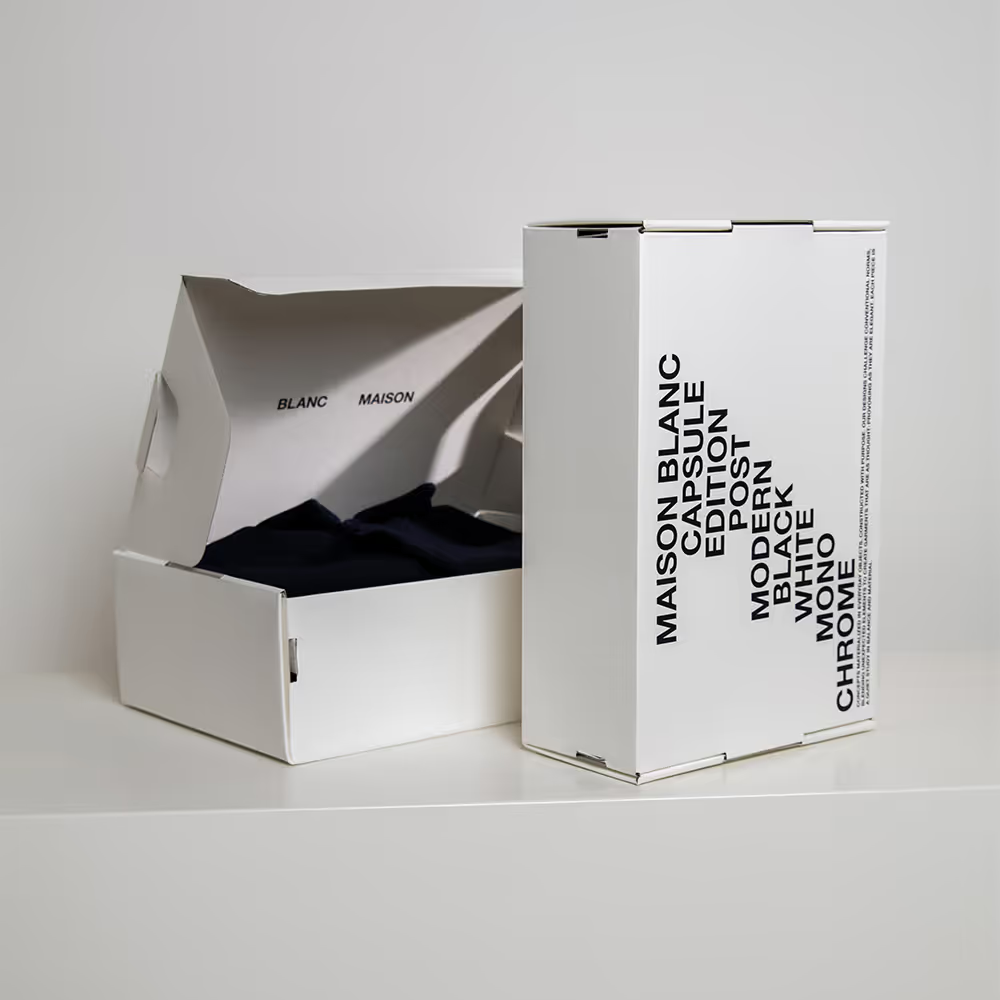
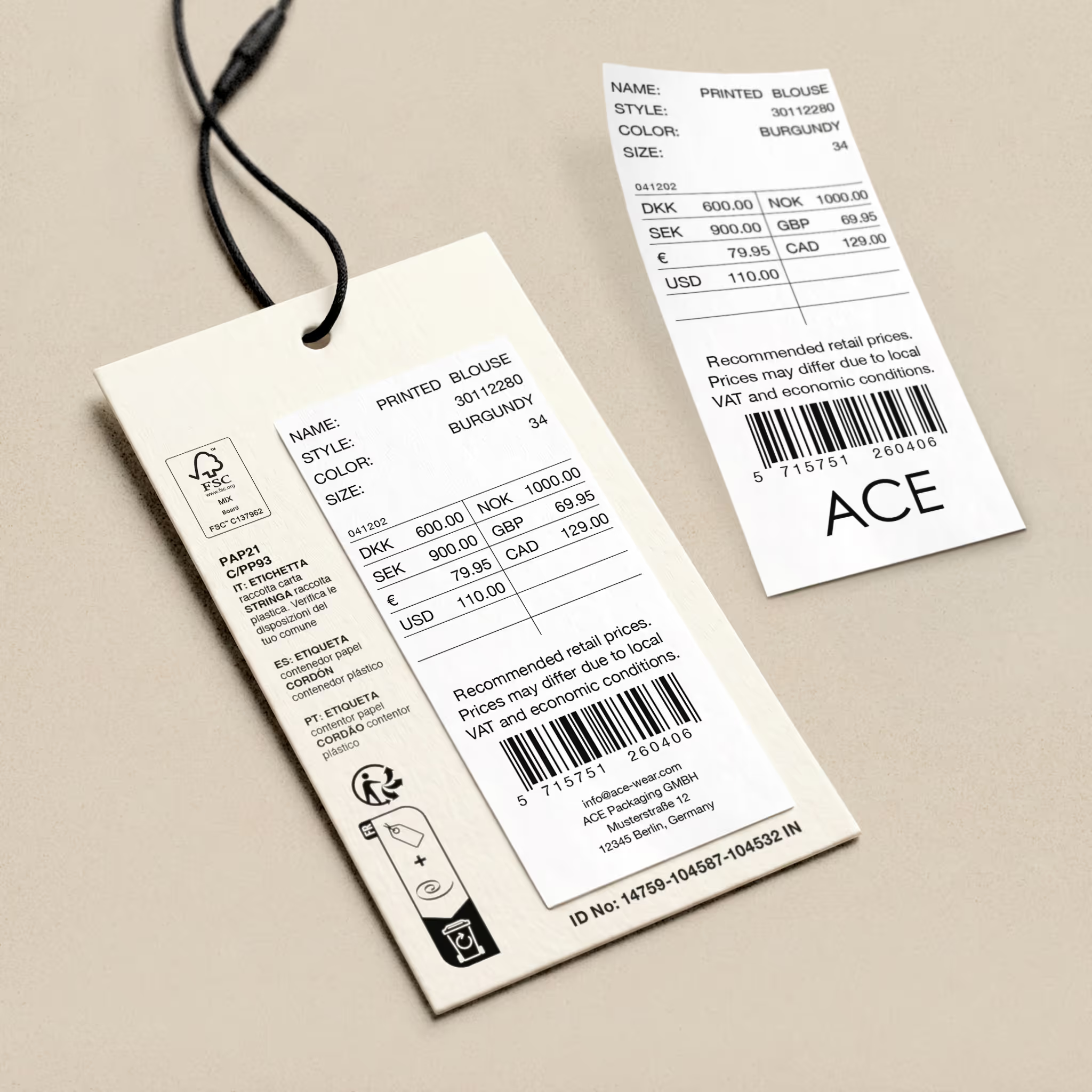
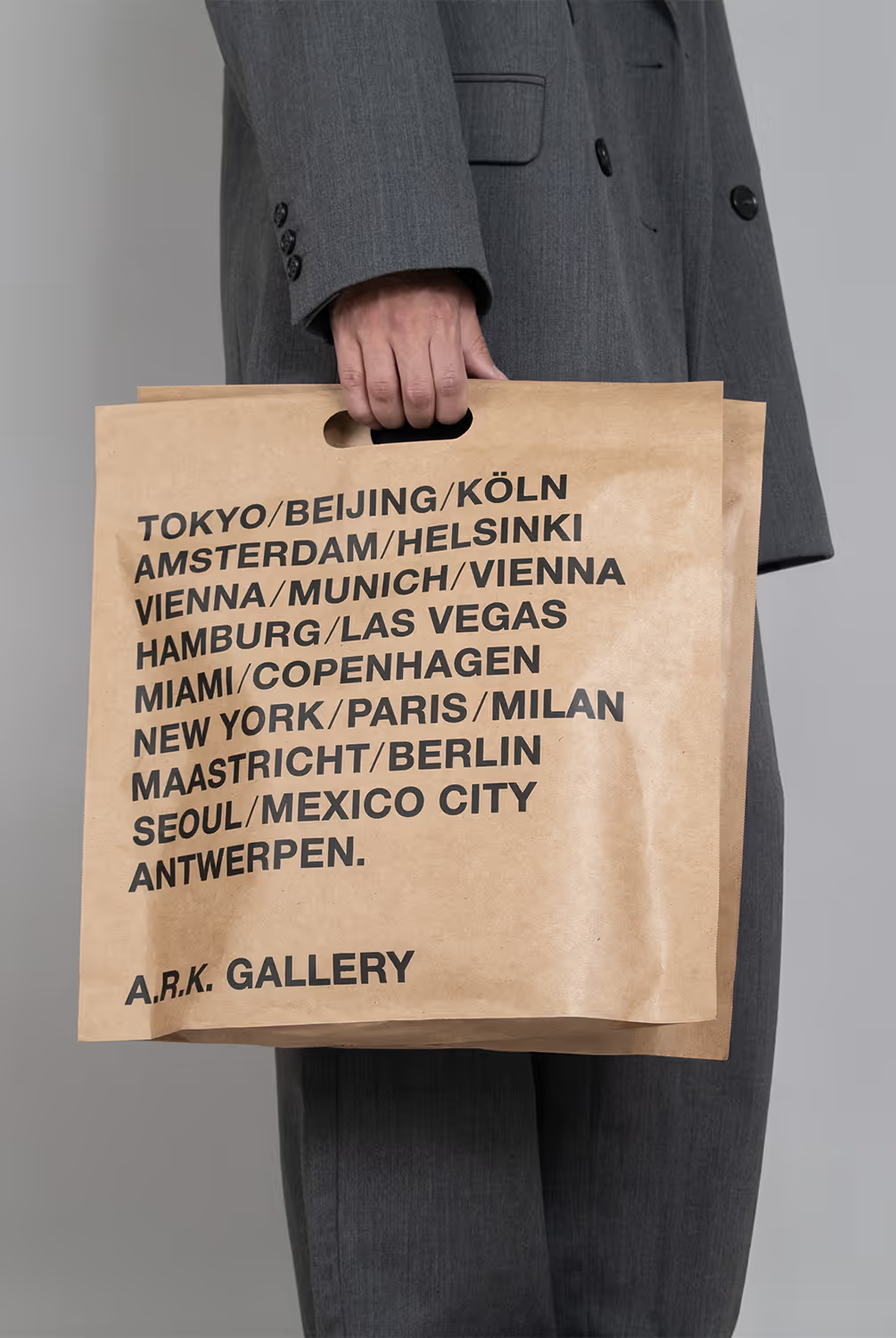
Hangtags· Polybags · Hangers · Boxes and cartons · Accessory and component packaging · E-commerce and transport packaging
Any item that contains, protects, handles, delivers, or presents a product is covered. This applies equally to EU-based brands and non-EU brands exporting into the European market. In most cases, your brand will be classified as the producer, making you directly responsible for EPR obligations.
Chemical Compliance: What Brands Need to Know
The PPWR also addresses the presence of substances of concern in packaging materials. These are defined under the Ecodesign Product Regulation and include:
/ Substances of Very High Concern (SVHC) under REACH
/ Substances classified in hazardous categories under the CLP Regulation
/ Substances classified under the Persistent Organic Pollutants (POP) Regulation
/ Substances that hinder reuse and recyclability — to be assessed in are port due by December 2026
Brands will need visibility into their packaging material compositions to meet these requirements.
Prepare for What's Coming
Beyond 2026, brands will need internal systems capable of supporting a single digital carrier (QR code) on packaging — one that can gradually carry increasing amounts of regulatory information as requirements expand over the coming years. Building that infrastructure now is far more efficient than retrofitting it later.
How Trimco Group Supports Your Compliance
Managing PPWR requires data management, material engineering, and reliable traceability — not just a packaging supplier. Many brands assume their current suppliers will handle these updates automatically. In practice, you need a partner to advice on the required actions and support with the necessary documentation.
Trimco Group provides:
/ Dynamic Data Carriers — Future-proof QR codes embedding 2026 identification requirements and contact details, printable directly on your packaging.
/ Conformity Documentation — Support for conformity assessments, technical design drawings, and formal EU Declarations of Conformity.
/ Traceability & Reporting — Data management systems for packaging traceability and EPR reporting.
/ Material Optimisation — Transitioning your packaging to meet recyclability grades and recycled-content thresholds without compromising structural integrity.
Your 2026 Compliance Options
Two practical paths to meet the August 2026 requirements:
Direct Printing — Regulatory information printed directly on packaging or on a sticker.
QR Code — A flexible, scalable solution. Information is editable in real-time, space-efficient, and future-ready as requirements evolve.
/Either way, you'll need the following details ready:
/ Brand name, registered trade name, or trademark
/ Postal address
/ Electronic contact details (where available)
/ Item ID number
Note: The UK Fashion and Textile Association (UKFT) interprets that an ID element should also be visibly printed on the physical packaging, even where a QR code solution is used, so this should be treated as a best-practice measure
Disclaimer: This material is for general informational purposes only. Trimco Group does not provide legal advice. Brands should consult their legal or compliance teams for formal guidance on PPWR requirements.
Last Updated 21.05.2026
Ready to Act?
Contact your Key Account Manager at Trimco Group or reach out directly to discuss the best compliance path for your packaging portfolio.
Contact us Today.avif)

.avif)
.svg)
.avif)

.avif)


.svg)